
/sci/ - Science & Math
science-and-math.bso
| 10/23/26 64 threads archived from science-and-math.bso. Last crawled 2m ago. |
File: PR-LS3-1.jpeg (image, 1440x1080)
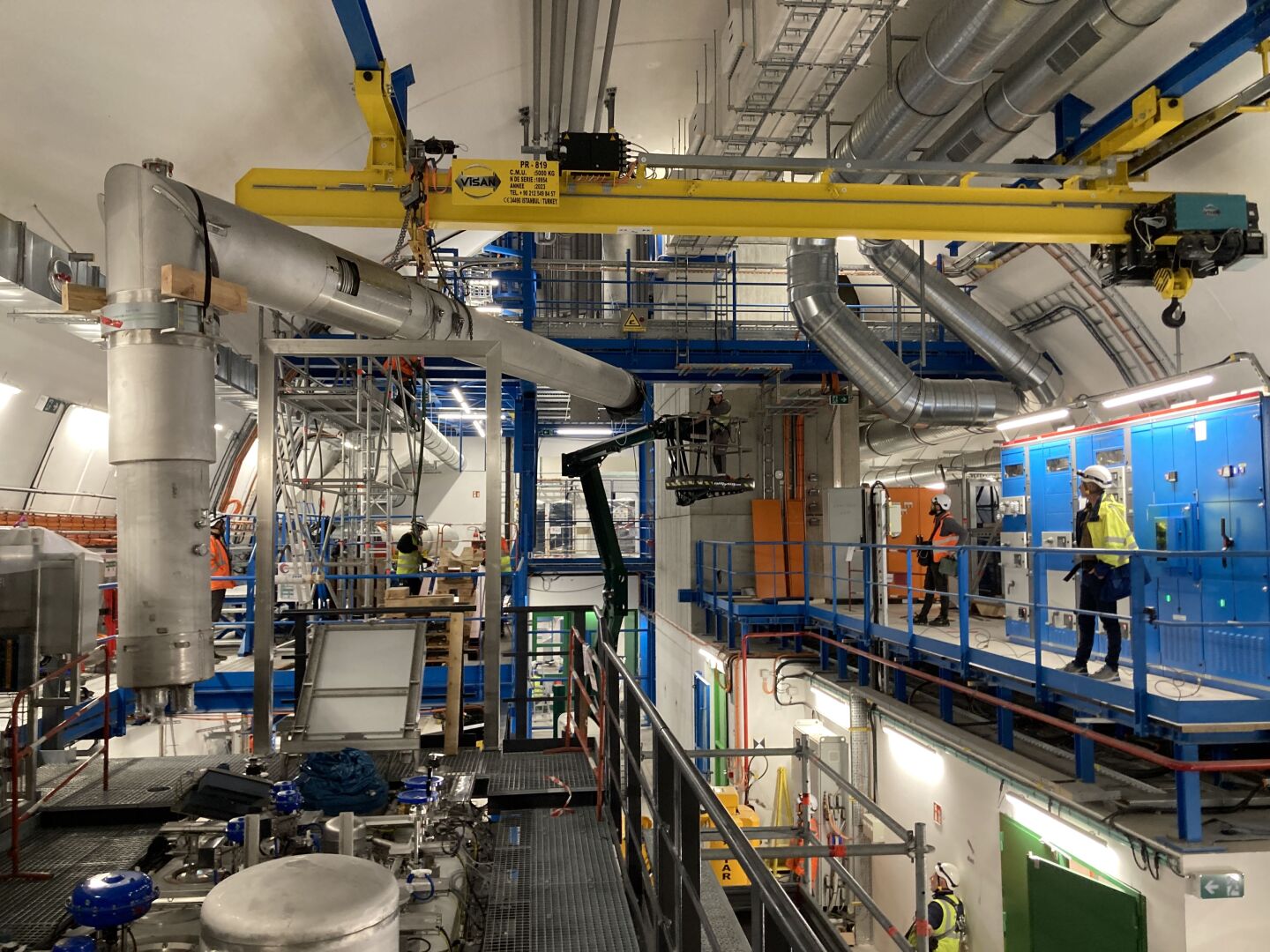
Have you felt anything? Anonymous No.121[View Thread]>>122>>124
CERN has shut down the Large Hadron Collider (LHC) for "Long Shutdown 3" (LS3). This is a major 4-year upgrade phase designed to transition the accelerator into the new High-Luminosity LHC. The refurbished machine will dramatically increase collision rates and is scheduled to start up in 2030.
https://home.cern/cern-bids-farewell-to-the-lhc-and-enters-long-shutdown-3/
>>
>>121 (OP)
I swear to God, just yesterday a crazy concidence happened to me, and crazy coincidences haven't been happening to me since 2019 or so. So I told my friend yesterday, I said maybe CERN did something to the space-time continuum haha you know? And now I see your post OP.>>
>>121 (OP)
I bet they have AC in there while the rest of the EU cucks are literally seething lolimage
CERN has shut down the Large Hadron Collider (LHC) for "Long Shutdown 3" (LS3). This is a major 4-year upgrade phase designed to transition the accelerator into the new High-Luminosity LHC. The refurbished machine will dramatically increase collision rates and is scheduled to start up in 2030.
https://home.cern/cern-bids-farewell-to-the-lhc-and-enters-long-shutdown-3/
4 RepliesView Thread
>>121 (OP)
I swear to God, just yesterday a crazy concidence happened to me, and crazy coincidences haven't been happening to me since 2019 or so. So I told my friend yesterday, I said maybe CERN did something to the space-time continuum haha you know? And now I see your post OP.>>121 (OP)
I bet they have AC in there while the rest of the EU cucks are literally seething lolFile: AmeWMURL2FDwwuCv.mp4 (image, 720x1280)

Anonymous No.118[View Thread]
1 ReplyView Thread
File: croatian-freediver-vitom...t-v0-u1sl2j8yg68h1.jpeg (image, 640x797)

Anonymous No.110[View Thread]>>113
Croatian freediver Vitomir Maričić achieved one of the most extraordinary feats in human history by holding his breath underwater for 29 minutes and 3 seconds, a new Guinness World Record.
>>
Experts had long considered such a duration impossible. While a trained dolphin can typically hold its breath for 8–10 minutes and most humans can barely manage one or two, Maričić remained completely still underwater for nearly half an hour on a single breath.
The attempt pushed his body to extreme limits. As the minutes passed, powerful contractions wracked his diaphragm and his organs endured intense physiological stress. Yet through years of rigorous training, mental discipline, and specialized breathing techniques, he stayed calm and focused until the end.
What makes this record even more impressive is Maričić’s purpose. He didn’t do it for fame or personal glory, he used the achievement as a powerful platform to raise global awareness about ocean conservation, marine protection, and the urgent threats facing our oceans.
A stunning demonstration of human potential and a heartfelt call to protect the planet’s most vital ecosystem.>>
>>110 (OP)
29 minutes is insaneimage
Croatian freediver Vitomir Maričić achieved one of the most extraordinary feats in human history by holding his breath underwater for 29 minutes and 3 seconds, a new Guinness World Record.
3 RepliesView Thread
Experts had long considered such a duration impossible. While a trained dolphin can typically hold its breath for 8–10 minutes and most humans can barely manage one or two, Maričić remained completely still underwater for nearly half an hour on a single breath.
The attempt pushed his body to extreme limits. As the minutes passed, powerful contractions wracked his diaphragm and his organs endured intense physiological stress. Yet through years of rigorous training, mental discipline, and specialized breathing techniques, he stayed calm and focused until the end.
What makes this record even more impressive is Maričić’s purpose. He didn’t do it for fame or personal glory, he used the achievement as a powerful platform to raise global awareness about ocean conservation, marine protection, and the urgent threats facing our oceans.
A stunning demonstration of human potential and a heartfelt call to protect the planet’s most vital ecosystem.>>110 (OP)
29 minutes is insaneFile: m2-res_638p.mp4 (video, 360x638)
a flexible rock Anonymous No.108[View Thread]>>109
https://en.wikipedia.org/wiki/Itacolumite
>>

2 Replies / 1 LinkView Thread
File: scientists-thought-the-p...s-v0-1c893ia1e27h1.jpeg (image, 1080x1350)

Anonymous No.105[View Thread]
Scientists thought the platypus was a hoax when it was first discovered. It lays eggs, produces venom, detects electricity, and even glows under UV light.
File: humans-are-200-000-times...he-v0-m39i0ojp0n5h1.png (image, 1024x948)

Anonymous No.99[View Thread]
Humans are 200,000 times more sensitive to petrichor, the smell that follows rain, than sharks are to the smell of blood.
image
Humans are 200,000 times more sensitive to petrichor, the smell that follows rain, than sharks are to the smell of blood.
2 RepliesView Thread
File: m2-res_360p.mp4 (video, 640x360)
Anonymous No.96[View Thread]
Restaurant in Japan conducted an experiment to show how fast a virus can spread unnoticed
Restaurant in Japan conducted an experiment to show how fast a virus can spread unnoticed
File: a-comparison-of-climatic...n-v0-0joayp9o9z4h1.jpeg (image, 1080x1110)

Anonymous No.94[View Thread]>>97
A comparison of climatic analogues across the Northern Hemisphere
File: m2-res_854p.mp4 (video, 480x854)
A scorpion molting its skin Anonymous No.92[View Thread]
1 ReplyView Thread
File: m2-res_854p.mp4 (video, 480x854)
China is testing a motorized mobility device that can reportedly boost a pe(...) Anonymous No.87[View Thread]>>88
File: grasshopper-infected-and...us-v0-xbkxr0a8u3ea1.jpg (image, 1080x840)

Grasshopper infected and consumed by Cordyceps fungus Anonymous No.74[View Thread]>>80>>84
File: 10519_2025_10215_Fig1_HTML.png (image, 1499x913)

Anonymous No.73[View Thread]>>76>>81
Tattoos used to be much less common, and where they were once more common among men, they are now more common among women.
Source: https://doi.org/10.1007/s10519-025-10215-3
image
Tattoos used to be much less common, and where they were once more common among men, they are now more common among women.
Source: https://doi.org/10.1007/s10519-025-10215-3
3 RepliesView Thread
File: m2-res_360p.mp4 (video, 640x360)
Alsomitra macrocarpa flying seed Anonymous No.71[View Thread]
Alsomitra macrocarpa has seeds which use paper-thin wings to disperse like giant gliders
File: new-species-of-chimaera-...rk-v0-94pfbjvqbc2h1.jpg (image, 1080x550)

New Species of Chimaera discovered in Coral Sea Marine Park Anonymous No.62[View Thread]
https://www.vox.com/climate/488948/deep-sea-creatures-photos-ocean-census